The first song I ever knew all the words to was Billy Joel's You May Be Wrong. I was probably only five or six, singing the closing refrain over and over:
"You may be wrong, but you may be right.
You may be wrong, but you may be right."
That's quite a strong mantra to be repeating at a young and formative age - and it does seem to have taken root as part of my core philosophy.
I was recently talking to someone who had a big career at one of the UK's top hedge funds. Now retired, he coaches macro portfolio managers, talking to them about working with ambiguity and doubt.
We talked about making decisions when you don't have all the information. About risk. About being able to admit when you're wrong without shame. Knowing when to change direction, and how to keep moving when you can't know what is going to happen next.
It sounded familiar.
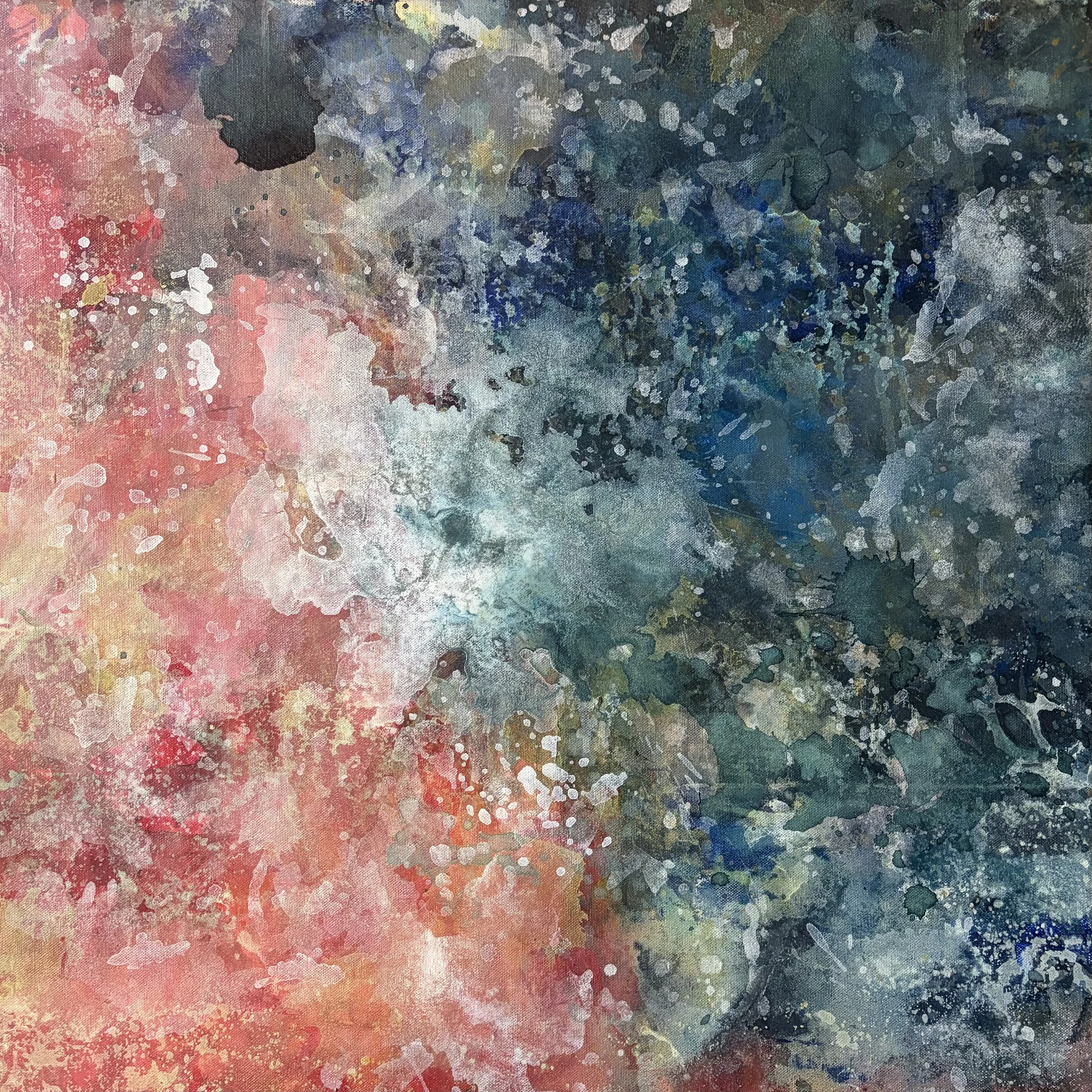
Talk to any artist about the role of fear in the creative process and you might be surprised by how enthusiastically they respond.
Making anything involves all sorts of decisions where you don't know the answer in advance - along with the painful risk that you might destroy something you've invested a huge amount of time and effort in.
But if you stay too safe and hide from that fear, you're unlikely to ever make something interesting.
You make a mark. You respond to it. You make another decision. Sometimes it works. Sometimes it doesn't. Sometimes you realise you've taken the whole thing in completely the wrong direction.
You may be wrong, but you may be right.
Regardless, you have to decide what to do next.
The other place I feel this sensation is when I'm surfing - a manifestation of the same problem in physical form.
You can't control the wave. As it approaches, you can read it as best you can and weigh up your options. But at a certain point you have to make a decision and commit without knowing exactly what will happen.
And once you've committed, there's not much point wishing you hadn't. The wave is going to do what it's going to do, and you're either on it or under it.
Maybe the link seems tenuous. Not many people would draw a line between macro investment strategies, creative process and surfing.
But I've always been interested in the crossover point where guidelines and logic give way to instinct and judgement. How to navigate conditions of incomplete or ambiguous information.
Because there's a difference between uncertainty and lack of confidence. You can be uncertain and still commit. You can know that you might be wrong and still make the decision.
Creative practice isn't about learning to eliminate uncertainty. It's about becoming more comfortable making decisions in its presence.
And being willing to change direction when your instinct - or the wave - tells you that you should.